

Every time I open my MacBook, I still get that same feeling I had years ago — the smooth, cold surface, the seamless hinge, the way the whole body feels like it’s carved from a single block of metal.
People often ask: “What material is the MacBook made of? Is it aluminum? Is it alloyed with something?”
The short answer: Yes, it’s aluminum — but not just any aluminum. The long answer reveals why this choice is one of Apple’s smartest design decisions ever.

1. The MacBook’s Body: Crafted from 6000-Series Aluminum Alloy
Apple’s MacBooks, from the Air to the Pro line, are made from 6000-series aluminum alloy, primarily 6063 or 6061.
This alloy is famous for its strength-to-weight ratio, durability, and ability to be precisely CNC machined — which allows Apple to create that iconic “unibody” design.
The entire chassis — from keyboard deck to display lid — is cut from a solid block of aluminum using high-precision CNC milling machines. That’s why every edge feels perfectly smooth, and there are no visible seams or weak points.
I’ve visited a precision machining factory once — and believe me, watching an aluminum billet slowly transform into a MacBook-like shell under a CNC mill is mesmerizing. It’s industrial ballet.
This process is also what makes the MacBook feel so dense yet light. The frame is rigid enough to withstand torsion but still thin enough to slide into a sleeve without warping.
2. Why Aluminum, Not Magnesium or Carbon Fiber?
A lot of people wonder: If aluminum is so “old-school,” why doesn’t Apple switch to lighter materials like magnesium alloy or carbon fiber?
I’ve used laptops from other brands that tried those options. For example, some magnesium alloy laptops are lighter — but they dent easily and feel hollow. Carbon fiber, on the other hand, looks sleek but can’t achieve the same precise tolerances in manufacturing.
Aluminum, however, gives you:
- Rigidity: The lid doesn’t flex when you open it.
- Consistency: No uneven textures or mismatched panels.
- Thermal performance: It helps dissipate heat passively.
In other words, aluminum may not be exotic, but it’s perfectly practical — and that’s why Apple keeps using it.
3. The “Unibody” Revolution
Before 2008, most laptops were built like sandwiches — multiple panels screwed together with internal frames. They were heavier, squeakier, and prone to flexing.
Then Apple dropped the “unibody” design, milling the entire chassis from a single block of aluminum. The result?
- Fewer parts → fewer points of failure
- Better rigidity
- A cleaner, minimalist aesthetic
This wasn’t just a design statement; it was a manufacturing revolution.
Apple’s engineers even developed custom CNC toolpaths to reduce cutting time and waste. The machining accuracy they achieved set a new standard — one that many Windows laptop makers still struggle to match.
I remember trying a 2010 MacBook Pro right after using a plastic-bodied Dell. The difference in feel was ridiculous — one felt like an appliance, the other like a piece of precision equipment.
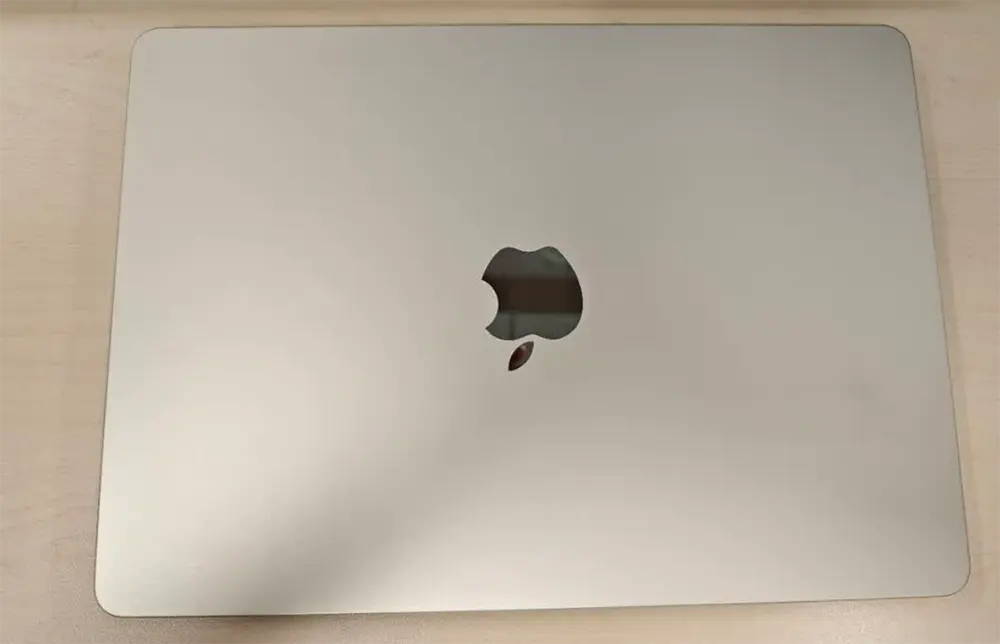
4. The Role of Finishing and Anodizing
The iconic “space gray” and “silver” finishes aren’t paint — they’re the result of anodizing, an electrochemical process that changes the aluminum’s surface layer.
This oxide coating makes the MacBook more resistant to corrosion and wear while giving it that premium, satin-like texture.
If you’ve ever noticed that your MacBook doesn’t scratch easily or lose color over time, that’s anodization doing its job. It’s not just cosmetic — it’s functional durability.
The anodizing process also gives Apple room for subtle color variations. That’s why the MacBook Air M3’s “midnight” shade has that deep, reflective tone instead of a flat matte black.
5. Sustainability: Recycled Aluminum
In recent years, Apple has taken aluminum engineering even further. According to their Newsroom announcement, every modern MacBook’s enclosure is now made from 100% recycled aluminum.
This isn’t marketing fluff — it’s a real materials shift. The recycled alloy performs the same as virgin aluminum but drastically reduces carbon emissions.
It also shows how design and sustainability can coexist. The same CNC precision that gives the MacBook its perfect lines now helps Apple reuse scrap aluminum more efficiently than ever.
6. What You Don’t See: The Invisible Precision
The more I learned about manufacturing, the more I appreciated Apple’s material choice. For instance, that razor-sharp chamfer around the MacBook’s edge isn’t accidental — it’s a product of fine CNC finishing and micro-polishing.
Apple even uses custom injection molding for certain internal components, combining plastic and metal seamlessly. This ensures consistent tolerances across the board — an approach similar to what’s used in high-end product casings discussed on CNC cost guide.
All these details add up. When you rest your palms on the deck, you don’t feel a mix of materials — you feel one continuous piece of precision. That’s not just design; that’s engineering artistry.

7. Why the MacBook Still Feels Different
Let’s be honest — other laptop makers also use aluminum now. But none of them feel like a MacBook. Why?
Because Apple’s aluminum isn’t just a material; it’s a philosophy. It’s their balance between mass production and craftsmanship, between efficiency and emotion.
When you lift a MacBook lid, there’s a quiet resistance — not too tight, not too loose. When you type, the palm rest stays cool. When you close it, it shuts with a crisp, magnetic click. That’s not coincidence; it’s precision born from material mastery.
I’ve tested plenty of other laptops, some with fancy materials and wild designs. But every time I come back to my MacBook, it feels like home — simple, solid, and beautifully rational.
8. Final Thoughts: Why Aluminum Still Wins
If there’s one thing Apple’s proven over decades, it’s that innovation isn’t about changing materials every year — it’s about perfecting the one that works best.
Aluminum might seem old-fashioned in an era of folding screens and carbon fiber shells, but it’s the only material that delivers the exact balance of strength, thermal performance, and aesthetic appeal that Apple demands.
And as someone who’s handled both prototype plastics and magnesium frames, I’ll say this bluntly: no other material gives you that same feeling of absolute precision.
So yes — your MacBook’s body is aluminum. But more importantly, it’s a story of how a single material, when engineered with obsession, can become an identity.